venerdì 20 aprile 2007

Polifonic game - 1

Title : Polifonic game 1 -- Author, arrangements & performance : Fabio Ranghiero 
Type of file : mp3 -- size : 1763 kb 

Ho cominciato a suonare per gioco, poi è diventata una cosa più seria e articolata. Spero che succeda la stessa cosa con i giochi polifonici, che si trasformino in composizioni valide e piacevoli da ascoltare I’ve started to play only as a joke, but then it has become a more serious and complex situation. I hope it will be the same with the polyphonic games, that they will become good and nice compositions.

mercoledì 18 aprile 2007

Parte la campagna pubblicitaria !


Da oggi e per 2 mesi circa il banner di questo blog apparirà in un circuito di siti per un totale di 2000 impressioni giornaliere. Una piccola campagna pubblicitaria per "tastare il polso" ai navigatori . Non sono fiducioso ma comunque voglio capire cosa può succedere, per me è già importante che il nome del sito cominci a comparire in giro per la rete. Il banner l'ho creato io con un tool-base. Dopo 2 giorni già non mi piace e in futuro cercherò di crearne uno di più attraente. Perdonatemi...con le note riesco a fare qualcosa con il pennello non mi riesce niente o quasi. Mi faccio gli auguri e non mancherò di comunicare i risultati ottenuti. Intanto chi arriva guidato da questo banner può lasciare i propri suggerimenti e, naturalmente, visitare il cuore del blog ovvero i brani pubblicati nel 2005 (songs 2005), nel 2006 (songs 2006) e nel 2007 (songs 2007).

From today and for two months, the banner of this blog will be a combination of sites of 2000 daily impressions. This is a little advertising campaign on how “to feel the pulse” of the Internet surfers. I’m not so trustful, anyhow I want to know what can be happened. At this point it’s very important for me that the site appears on the Net . I’ve personally created the banner using a tool-base. I don’t like it very much, probably I will create another more attractive. Please forgive me… I’m able to create something with notes but with the brush it’s a failure. I wish to myself all the best and I will certain tell you the results. In the meantime you can leave your suggestions and, of course, visit the heart of the blog that is the tracks published in 2005 (songs 2005), in 2006 (songs 2006) and in 2007 (songs 2007).

martedì 17 aprile 2007

Video: four fried fish


Riprendo la pubblicazione dei video presenti su youtube e che riguardano il mio gruppo, i Four Fried Fish. Il brano è "blues for Mr.G", suonato al festival blues di Pontinia del 2006.

I’ve started again to publish videos on youtube site about my band, the Four Fried Fish. The track is “blues for Mr.G”. It was played at Pontinia Festival in 2006.

venerdì 13 aprile 2007

Il mio Hammond - parte 3


Questa è la parte destra del C3. Sono presenti 4 interruttori che regolano la percussione, che e' l'effetto tipico dell'hammond, il primo interruttore è l'ON/OFF, il secondo regola il volume della percussione, il terzo la lunghezza (o decay) ovvero la durata della percussione, il quarto la tonalita' della stessa Gia' variando la tonalita' (terza o quinta) si ottengono effetti diversi. In alto a destra puoi notare i due interruttori per accendere l'organo. Il primo accende il generatore, il secondo è il vero Power.
Uno dei segreti del suono dell'organo HAMMOND risiede nel LESLIE, ovvero nell'amplificatore "rotante" che crea un timbro magico e affascinante che ancora oggi ci fa sognare. Il leslie "butta " il suono intorno a 360 °...e questo risuona in modo differente a seconda della stanza in cui si trova !! Praticamente, volendo essere un po' fantasiosi, un suono diverso ad ogni occasione!!!! I tasti bianchi e neri "al contrario" che vedi sulla sinistra delle tastiere non vanno suonati ! Si tratta dei presets, ovvero di selettori che attivano una configurazione di suono prestabilita dal musicista. In altre parole ogni tastiera ha a disposizione 2 suoni "modificabili" in tempo reale grazie ai drawbards selezionabili con il tasto si bemolle bianco o si nero, ed altri 9 "prefatti" a cui si accede premendo tutti gli altri tasti (si possono modificare solo aprendo lo strumento). Il do iniziale funziona come "reset" ovvero alza tutti gli altri tasti djsattivando quindi il suono. Spero di essere stato chiaro soprattutto nei confronti di chi sta vedendo un organo Hammond per la prima volta e mi scuso con i tecnici dello strumento che saranno sicuramente scandalizzati da questo mio servizio forse troppo sempliciotto.

This is the right side of the C3. There are 4 switches that control the percussion, that is the typical effect of the Hammond. the first switch turns the effect ON and OFF, the second one adjusts the volume of the percussion, the third one the decay, i.e. the length of the percussion, the fourth the tonality of the effect itself. Just by varying the tonality (third or fifth), you can obtain different effects. On the top right you may notice the two switches that turns the organ on. The first one turns on the generator, the second is the actual power button.
One of the secrets of the HAMMOND organ sound is inside the LESLIE, i.e. in the "rotating" amplifier that generates a magical and captivating timber that make us dream even now.
The Leslie spreads the sound at 360°... making it resound in different ways depending on the room it is in !!! Practically you may have a different sound in each occasion!!!! The white and black keys "upside-down" that you can see on the left of the keyboards don't have to be played! They are the "presets", i.e selectors that activate a sound configuration previously set by the musician. In other words each keyboard has 2 sounds that can be adjusted in real time thanks to the drawbards, selectable from the white B flat* or black B, and other 9 preset that can be turned on pressing the other buttons (they can be modified only by opening the organ). The initial C works as a reset, i.e. it raises all the other buttons turning off the sound. I hope I've made myself clear, especially for the people who have seen a HAMMOND organ for the first time, and I apologise with the technician of the instrument that will be surely scandalized by this simply explanation.

Translation: Giorgio Ghezzi

martedì 10 aprile 2007

The call

Title : The call -- Author, arrangements & performance : Fabio Ranghiero Type of file : mp3 -- size : 2935 kb

Ho ricevuto una chiamata importante. Devo impegnarmi a far crescere questo blog, a migliorarmi. Anche con l'autocritica. Nei prossimi giorni, e per sempre, aggiungerò una nuova rubrica in cui recensirò le mie canzoni con tanto di voto. Intanto Buona Pasqua a tutti ! I’ve received an important call. I have to improve myself and raise this blog also with self-criticism. In the next days and forever, I’m going to add a new page in which I’ll review my tracks with marks. In the meantime I wish you a happy Easter!

mercoledì 4 aprile 2007

Il mio Hammond - parte 2


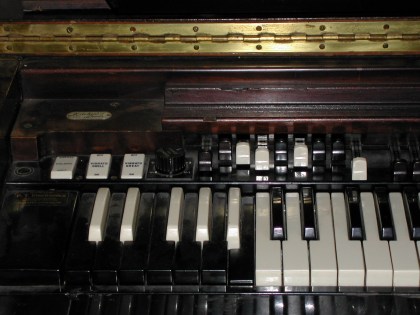
Tutti quei pomellini che vedi sopra i tasti sono i famosissimi "drawbards", divisi a gruppi di 9, servono a "creare " il suono che uscirà dall'organo. Infatti dalla combinazione di 9 drawboards si possono creare infiniti timbri, e infinite atmosfere!! La bravura di un hammondista si misura anche dalla capacità di usarli mentre suona visto che come ogni essere umano è dotato di 2 mani !! Il modello C3 come pure il B3 e l'A100 si compone di 4 serie di drawbards, due serie per la tastiera superiore e 2 per l'inferiore.In questo modo si facilita di non poco il lavoro "creativo" del musicista.Nel lato sinistro dell'organo sono presenti 3 interruttori. Il primo regola due tipi di uscita del suono (soft o hard), il secondo ed il terzo attivano o disattivano l'effetto di tremolo o chorus della tastiera superiore o inferiore. L'effetto serve a "ravvivare" il suono. Purtroppo a parole e' difficile spiegare, cerchero' di farlo nelle pagine future con esempi "reali". Accanto a questi interruttori c'e' un potenziometro che regola i diversi tipi di modulazione...chorus 1,2 e 3, tremolo 1,2 e 3.

Translation: Giorgio Ghezzi

All those little knobs that you can see above the keys are the extremely famous "drarbards". Divided into groups of 9, they are used for "creating" the sound coming out of the organ. From the combination of 9 drawboards you can create an infinite number of timbres and atmospheres! The skill of a hammond player can be also measured from his ability in using them while playing, as he has only two hands like every other human being! The C3 model, like the B3 and A100, is composed of 4 series of drawbards, 2 series for the upper keyboard and 2 for the lower one. In this way the "creative" work of the musician is made much easier. In the left part of the organ there are 3 switches. The first one chooses between 2 kind of sound output (soft or hard), while the second and the third one turn the "tremulus or chorus" effect ON or OFF for the upper and the lower keyboards. This effect is used to "reinvigorate" the sound. Unfortunately it is not easy to explain this in words, but I'm going to try in the future using also some "real" example. Next to these switch there is a potentiometer that adjust the various kind of modulation....chorus 1,2 and 3, tremolo 1,2 and 3.

lunedì 2 aprile 2007

Nintendarea : jingle


Title : Nintendarea - Jingle -- Author, arrangements & performance : Fabio Ranghiero
Type of file : mp3 -- size : 280 kb


Il nuovissimo blog "Nintendarea" (vedi links nella colonna a destra) mi ha "commissionato" un jingle di apertura per un Podcast che verrà pubblicato, si pensa, con cadenza settimanale. Ve lo propongo come brano della settimana, spero vi piaccia. E faccio i migliori auguri al nuovissimo sito che parlerà in modo nuovo di videogames e Nintendo.